Dusting is easy to describe and surprisingly easy to leave unclear. A proposal may include it without saying whether that means desk tops, low ledges, cabinet tops, or the crowded shelf behind reception. The differences become visible over time, especially in spaces where floors look tidy but edges and horizontal surfaces receive little attention. For a manager evaluating cleaning support, the useful question is which surfaces are included and what access they require. A thoughtful plan makes overlooked details part of the work instead of an occasional surprise.
Look at the room from more than standing height
Start your dusting review at the heights people actually see throughout the day. A standing walk through a room may miss the base of a reception desk that visitors notice while seated. A meeting table can look fine from the doorway while its supporting frame has visible dust. Change your viewpoint without moving furniture or climbing to inspect something that is out of ordinary reach.
Note horizontal ledges, exposed edges, and objects that interrupt an otherwise simple surface. Window sills, open shelving, picture frames, and the upper edge of a partition can all need separate consideration. Record the location and material rather than simply writing dusty. That detail helps a provider understand the task and decide whether it belongs in routine work or a scheduled detail visit.
For a hypothetical professional office, a seated view from the waiting area might reveal dust on the lower shelf of a brochure stand even when the reception counter is well maintained. The manager could add that shelf explicitly to the scope. The example shows why a useful inspection follows the room's real sightlines instead of judging the entire service by one prominent surface near the door.
Describe low surfaces that disappear into the background
Low surfaces are often hidden by chair legs, bins, planters, or the visual clutter of an occupied office. Review baseboards, accessible furniture supports, lower cabinet edges, radiator covers where present, and the exposed bases of freestanding fixtures. Confirm the materials and any special care instructions before including them. Decorative trim and painted surfaces may need a different approach from durable office furniture.
Specify whether the work includes only visible faces or accessible ledges as well. A baseboard may have a narrow upper edge that collects dust even when its front appears clean. Similarly, a chair base is not the same task as the surrounding floor. When those details matter to your office's presentation, name them so the provider can allow time and choose appropriate tools.
Do not assume every low surface is easy to reach. Tight spaces, cables, and heavy furniture can block access at floor level. During the walkthrough, identify what can be reached without moving equipment and what needs preparation by your team. A clear access boundary helps prevent damage and makes it easier to explain why one section was deferred rather than treating all unfinished low dusting as the same kind of service failure.
Give high surfaces their own scope and access review
Cabinet tops, high ledges, exposed beams, and other elevated surfaces should not be hidden inside a general dusting line. Height, room layout, nearby equipment, and the surface itself can change what is practical. Ask the provider which surfaces it can include using its appropriate equipment and procedures, and which require a separate service or specialist assessment. Do not define access only by whether someone can see the dust.
Keep managers and employees out of improvised access arrangements. The planning conversation should establish responsibility, suitable equipment, the work area, and timing. Avoid asking someone to balance on office furniture or stretch across installed equipment to reach a ledge. The provider should assess its own work requirements, and building management may need to coordinate where elevated surfaces are part of shared premises.
A hypothetical office with tall reception cabinetry could schedule elevated dusting when the area is unoccupied and the counter below has been cleared. That would give the provider a better chance to assess access and protect nearby items. The important decision is not a universal height limit. It is whether the exact surface and conditions have been reviewed and accepted within the proposed service.
Resolve shelves, displays, and personal objects
A shelf with two sturdy office supplies is a different cleaning task from a shelf filled with framed photographs, awards, fragile models, and trailing cables. Decide whether the provider dusts only exposed areas or removes approved objects to reach the surface underneath. Write the boundary clearly, including who restores the arrangement and what must remain untouched. Appearance expectations are difficult to meet when permission is left ambiguous.
For displays that need careful handling, an employee can prepare the surface before a scheduled visit and replace the objects afterward. That may be the simplest arrangement when items are fragile, valuable, or difficult to reposition. Do not ask cleaners to judge the significance of an unfamiliar object or to decide which paperwork can be lifted. The business should identify restricted items in advance.
Use a small set of display rules rather than individual instructions scattered across emails. Review them when reception displays or office shelving change. The following questions help define a repeatable task that respects the contents of the shelf and still allows meaningful cleaning of the surface supporting them.
- Which objects may the provider move during dusting?
- Who clears fragile, confidential, or personally owned items?
- Where should removed objects be placed temporarily?
- How will a blocked shelf be recorded for followup?
Separate electronic equipment from the furniture around it
Dust around a monitor stand, on a printer cabinet, or beside a conference room control panel can prompt an instruction to clean the equipment. Pause and define the actual task. Equipment exteriors, screens, ventilation openings, and internal components have different care requirements. The provider should follow manufacturer guidance for any equipment included in the service, and the scope should identify what is excluded.
Routine dusting should not turn into disconnecting cables, opening cases, or moving sensitive equipment without authorization. Coordinate with the responsible technology or facilities contact if access requires those actions. A desk may be cleanable around equipment even when the space beneath it needs a separate preparation step. Record that distinction so everyone understands what the provider can complete on an ordinary visit.
Consider a hypothetical office with a shared printing station. Its manager could include the accessible cabinet, paper storage ledge, and approved exterior surfaces in cleaning, while leaving internal printer maintenance with the equipment service arrangement. The plan would also identify who removes loose paper and deliveries before the visit. This creates a realistic boundary without treating the entire station as either fully included or completely off limits.
Be precise about vents, blinds, and light fixtures
These items often appear in requests for detailed dusting, but each needs a closer scope discussion. An accessible vent cover is different from the inside of a ventilation system. Ordinary visible surface care does not replace building system maintenance. Ask building management who owns that work and make sure the cleaning proposal does not imply that an exterior dusting task includes internal inspection or servicing.
Blinds and shades vary in material, condition, and construction. Some can be cared for in place under the manufacturer's guidance; others may need a separate method or specialist service. Note broken parts or delicate finishes before work starts. Clarify whether the scope includes the slats, headrail exterior, nearby sill, or only accessible portions. Avoid using one word, blinds, to represent several very different tasks.
Light fixtures also need an agreed boundary. Do not assume a routine cleaning crew will disassemble fittings or work around electrical components. Identify accessible exterior surfaces and refer anything beyond the accepted cleaning scope to the appropriate professional. These distinctions make a proposal more useful because they let you see what can be maintained during normal service and what must be planned separately with the building or equipment owner.
Choose frequencies by observing the surfaces
Dust does not become noticeable at the same rate on every surface. Location, occupancy, nearby activity, and the room's layout all influence what you see. Start with an agreed schedule and review representative surfaces over time. You may find that a low reception ledge needs regular attention while a protected cabinet top can be part of a less frequent rotation. Use observations to refine the plan.
Avoid writing monthly detail dusting without identifying the surfaces and completion window. A rotation can work well when the provider and manager both know which area is due. For example, different groups of included surfaces can be assigned to different scheduled visits. If a visit is missed or access is blocked, specify how the task moves forward so periodic work does not quietly disappear.
A hypothetical office beside an active renovation area might temporarily see more visible dust at the entrance. The manager could ask the provider to reassess ordinary cleaning needs and coordinate with building management about the source. Ordinary dusting should not be assumed to cover construction residue or an unknown material. The practical response is to identify the situation and agree on the appropriate service before expanding the routine scope.
Coordinate dusting with the rest of the visit
Dusting has a relationship to the work around it. The provider should plan the sequence so completed areas are not unnecessarily soiled again and so nearby objects receive appropriate protection. Ask how elevated or detailed dusting fits with care of the surfaces and floors below. You are checking that the visit has a coherent plan, not directing the cleaning team's every action.
Preparation can make a substantial difference to access. Employees may need to clear display shelves, move approved lightweight items, or make a room available. Name the person who coordinates that preparation and when it must be complete. If a room is needed for an event immediately afterward, include enough time for the full agreed service and an appropriate handback to the office team.
A short preparation checklist is particularly useful for occasional detail work because people may not remember the previous visit's arrangements. Keep it tied to the exact surfaces being serviced. Do not ask staff to move heavy furniture or disturb building equipment merely to make the checklist look complete. Escalate those access needs to the responsible person during planning.
- Confirm which rooms and surfaces are scheduled.
- Clear only the items your team has agreed to handle.
- Identify delicate finishes and restricted equipment.
- Confirm room access and the expected return to use.
Inspect the agreed surfaces without overstating the result
A useful dusting review checks whether included, accessible surfaces meet the agreed visual standard. Choose several representative points: perhaps a low ledge, a shelf edge, and an approved cabinet surface. Review them after service and before substantial new activity where possible. Do not climb, disassemble objects, or move restricted equipment just to check a cleaning task.
Describe what you observe in ordinary language. Visible dust along the top edge of the west partition is more actionable than the office still feels dusty. Include the location and whether the area was accessible. Distinguish loose surface dust from staining, finish wear, or damage. Those conditions may look similar from a distance but require different decisions from the provider or building manager.
A visual dusting check cannot establish indoor air quality or prove a health outcome. Keep the review connected to the service you purchased: removal of visible dust from the agreed surfaces using suitable care. If employees raise a broader building concern, involve the appropriate facilities professional. This preserves a fair way to evaluate cleaning while making sure questions beyond housekeeping reach someone equipped to assess them.
Ask for a dusting plan you can actually compare
Bring a surface list to a walkthrough, with notes about height, materials, obstructions, and handling restrictions. Ask the provider to mark what is included routinely, what belongs in periodic work, and what requires separate assessment. This makes two proposals easier to compare because a broad dusting promise no longer hides important differences in access and effort.
Discuss how the plan will change when the office adds storage, moves furniture, or installs new equipment. Those changes can create new ledges and block existing access. Agree on a reporting process for inaccessible areas and a way to request additional work. A concise, current surface list is more useful than a long checklist that nobody revisits after the first walkthrough.
Fresh & Clean Facility Solutions can review the overlooked surfaces in your office through a facility walkthrough request. Share the spaces that concern you and note any elevated areas or delicate displays so the team can assess the request. The website opens an email for team review. Your preferred visit time and local availability need confirmation before you arrange staff preparation or release rooms for the proposed work.
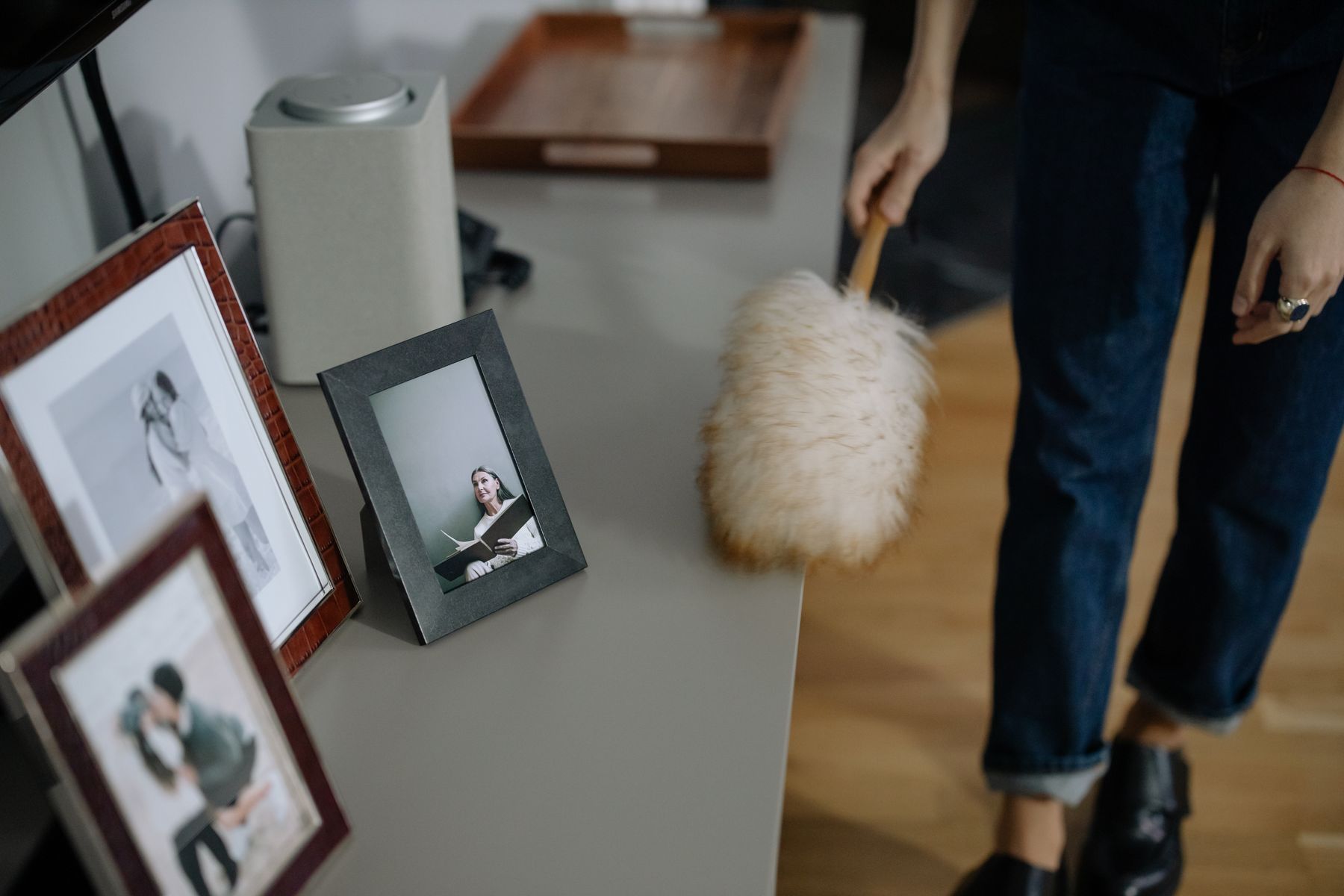
Photo: cottonbro studio / Pexels. Stock photography, not a Fresh & Clean customer project.
The takeaway
Dusting becomes easier to manage when the plan names the surfaces, defines handling permission, and accounts for access at every height. Include the low details people see while seated, give elevated work a separate review, and keep equipment maintenance distinct. Judge the completed service against the surfaces and results actually agreed.
Published by Fresh & Clean Editorial with AI writing assistance. This guide covers general facility planning, not a site inspection or a service commitment. Reading time is estimated at 200 words per minute. Specific services, access requirements and local availability are confirmed with our team.